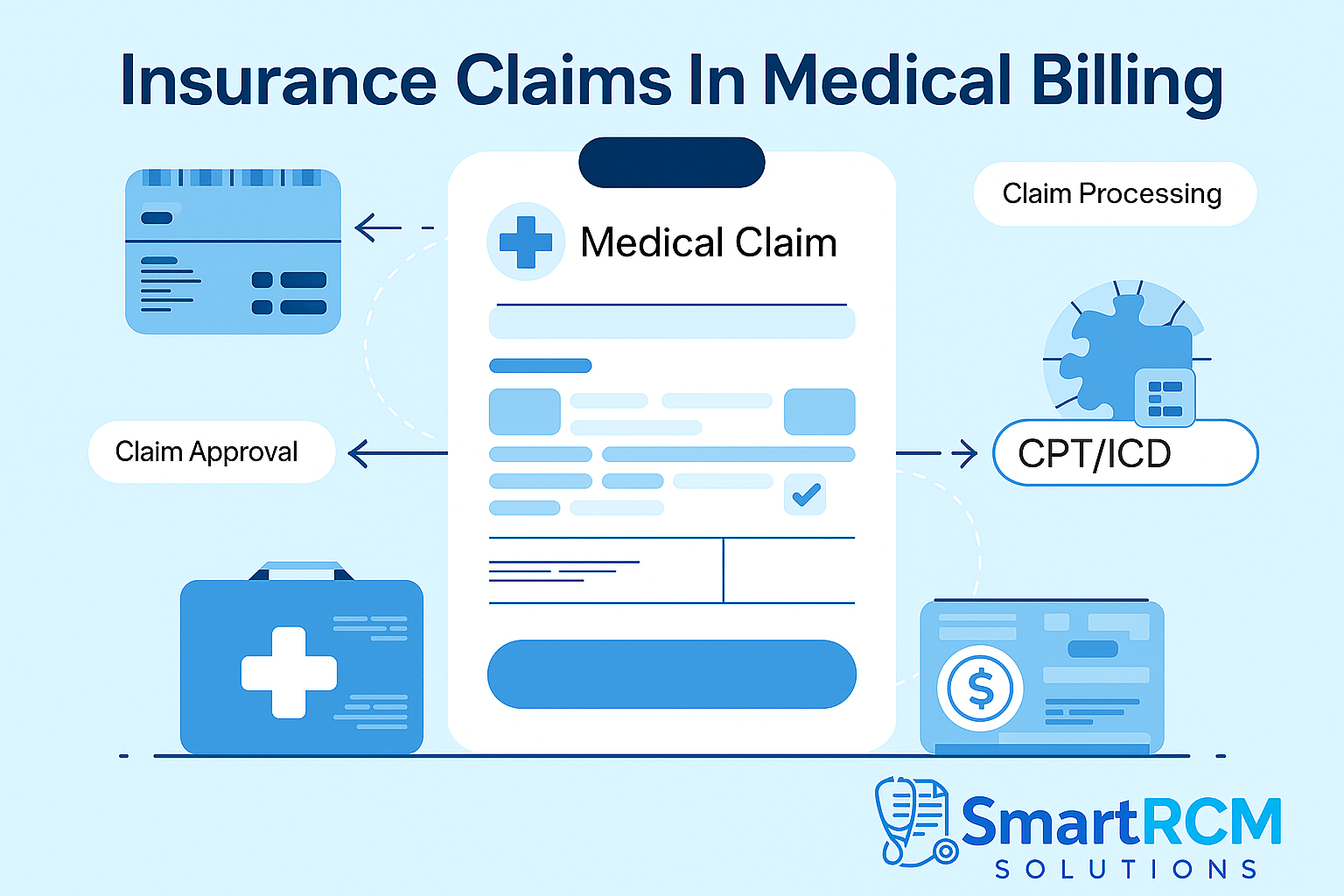
In the world of healthcare, getting paid isn’t as simple as handing over a bill. Instead, providers must navigate the insurance claims process — a detailed and sometimes frustrating path that stretches from patient registration to reimbursement.
Insurance Claims In Medical Billing
Whether you’re a medical biller, clinic manager, or healthcare provider, understanding each stage of this journey is crucial for minimizing delays, reducing denials, and maintaining a healthy revenue cycle.
This comprehensive guide breaks down every step of the process, from claim creation to payment, while highlighting common pitfalls and best practices.
Why Insurance Claims Matter in Medical Billing
Insurance claims are the backbone of the medical billing process because they directly determine how and when healthcare providers get paid. Without properly submitted claims, even high-quality patient care does not translate into revenue. Therefore, understanding how claims work is essential for financial stability.
In addition, accurate claims submission reduces the chances of denials and delays. When claims are clean and complete, insurance companies can process them faster. As a result, providers receive payments more quickly and maintain steady cash flow.
Moreover, insurance claims also ensure transparency between providers and payers. Every service is documented, coded, and justified through the claim. Consequently, this process supports compliance and reduces the risk of disputes.
📌 What is an Insurance Claim?
An insurance claim is a formal request sent by a healthcare provider to a patient’s insurance company, asking for reimbursement for medical services rendered.
It includes:
- Patient information
- Diagnosis codes (ICD-10)
- Procedure codes (CPT/HCPCS)
- Provider details
- Service dates and costs
🧭 Step-by-Step: How an Insurance Claim Moves Through the System
1. Patient Registration and Verification
Before the claim process even begins, it’s vital to collect accurate:
- Demographic information (name, DOB, address)
- Insurance details (payer name, policy number, group number)
👉 Tip: Always verify insurance eligibility before the appointment to avoid coverage issues later.
2. Coding the Encounter
After a provider sees the patient, medical coders assign:
- ICD-10 codes for diagnoses
- CPT/HCPCS codes for procedures and services
These codes form the foundation of the claim and must be accurate and compliant.
3. Claim Creation
Using practice management software, the biller creates a claim with all required information:
- Provider NPI and Tax ID
- Place of service
- Referring provider (if applicable)
- Service dates and charges
The claim can be electronic (837P or 837I) or paper (CMS-1500 or UB-04).
4. Claim Submission
The claim is then submitted to the insurance payer, usually via a clearinghouse.
Clearinghouses:
- Check claims for basic errors (scrubbing)
- Convert data into payer-compatible formats
- Forward claims to insurance companies
5. Adjudication by the Insurance Company
The insurance payer reviews the claim in a process called adjudication, where they:
- Validate the codes and coverage
- Check medical necessity
- Determine payment amount
They may:
✅ Approve the claim
❌ Deny it (with reasons)
🔁 Request more information
Read More: Medical Billing Compliance Checklist for 2025
6. Payment or Denial
Once adjudication is complete:
- A payment is issued to the provider or assigned party
- An Explanation of Benefits (EOB) or Electronic Remittance Advice (ERA) is sent, outlining:
- Amount billed
- Amount paid
- Patient responsibility
- Adjustments or denials
7. Posting Payment in the System
Billers post the payment details into the practice’s billing system to update the account. This is important for:
- Tracking revenue
- Managing patient balances
- Reporting financial performance
8. Follow-up or Appeal (if needed)
If the claim is denied or underpaid:
- The biller must review the EOB/ERA
- File an appeal with supporting documents
- Re-submit the corrected claim
📌 Note: Timely follow-ups can recover thousands in missed revenue.
Real-Life Example of Insurance Claims Processing
To better understand how insurance claims work, consider this real-world example.
A patient visits a clinic for a routine checkup. First, the front desk collects patient and insurance details. Next, the billing team verifies eligibility and confirms coverage. After the visit, the provider documents the services, and the coder assigns appropriate medical codes.
Once the claim is submitted, the insurance company reviews it carefully. If everything is accurate, the claim is approved, and payment is processed. However, if there is an error—such as incorrect coding—the claim is denied.
As a result, the billing team must correct the issue and resubmit the claim. Consequently, payment is delayed, and additional work is required. This example clearly shows how accuracy impacts the entire billing process.
Common Challenges in Insurance Claims Processing
Although the claims process follows a structured approach, healthcare providers often face multiple challenges.
One of the most common issues is incomplete or incorrect information. Even small errors in patient data or coding can result in claim rejection. Therefore, attention to detail is critical.
Another major challenge is payer-specific requirements. Each insurance company has different rules, which makes the process more complex. As a result, billing teams must stay updated with changing guidelines.
In addition, claim denials and delays create financial pressure. When claims are not processed on time, revenue flow is disrupted. Moreover, managing denied claims requires additional time and resources.
Finally, manual processes increase the risk of human error. Without automation, tracking claims and identifying issues becomes difficult.
🛠️ Common Reasons for Claim Denials
Even experienced billers encounter denials. Here are the most common causes:
| Reason | Explanation |
|---|---|
| Incorrect patient info | Misspelled name, wrong DOB, or outdated insurance |
| Invalid or missing codes | ICD or CPT codes are outdated or mismatched |
| Lack of prior authorization | Services rendered without required payer approval |
| Duplicate claim | Claim already submitted for the same service/date |
| Non-covered services | Procedure not included in the patient’s plan |
✅ Best Practices for Smooth Claim Processing
- Always verify eligibility before appointments
- Use clearinghouses to detect early errors
- Keep coding and documentation compliant
- Train staff on payer-specific rules
- Follow-up on unpaid claims every 14–21 days
- Stay current with insurance policies and code updates
Read More: What Is Prior Authorization in Medical Billing?
📈 Why Understanding the Claims Process Matters
Efficient claim handling leads to:
- Faster payments
- Fewer denials
- Happier patients
- Healthier cash flow
For clinics and billing teams, this knowledge empowers smarter workflows and better financial results.
❓ Frequently Asked Questions (FAQs)
1. What is an insurance claim in medical billing?
An insurance claim is a formal request submitted by a healthcare provider to an insurance company for payment of services provided to a patient. It includes details such as diagnosis codes, procedure codes, and patient information.
2. Why are insurance claims denied?
Insurance claims are often denied due to incorrect patient information, coding errors, missing documentation, or lack of eligibility verification. Therefore, accuracy is essential for approval.
3. What is a clean claim?
A clean claim is a claim that is submitted without errors and meets all payer requirements. As a result, it is processed quickly without delays or rejections.
4. How long does it take to process an insurance claim?
Processing time varies depending on the payer. However, clean claims are usually processed faster compared to those with errors.
5. How can healthcare providers reduce claim denials?
Providers can reduce denials by verifying insurance eligibility, using correct codes, and reviewing claims before submission. In addition, staff training improves accuracy.
6. What happens after a claim is denied?
After a claim is denied, the billing team reviews the reason, corrects the issue, and resubmits the claim. This process is known as denial management.
Best Practices for Successful Insurance Claim Submission
Improving insurance claim success requires a proactive strategy.
First, ensure accurate patient information during registration. Even small errors can lead to claim rejection. Next, verify insurance eligibility before providing services. This helps prevent unnecessary denials.
In addition, use correct and updated medical codes for every claim. Moreover, review claims carefully before submission to ensure they are complete and accurate.
Another important step is submitting claims on time. Delays can result in automatic rejection. Therefore, maintaining a structured workflow is essential.
🧠 Final Thoughts
Mastering the insurance claims process is essential for every medical billing professional. From submission to payment, understanding each step allows you to reduce delays, minimize rejections, and improve your practice’s financial performance.