The Residency Match 2026 marks a pivotal moment for medical students and graduates worldwide. Applicants await Match Day 2026 to discover their assigned programs, while residency programs finalize their incoming classes. The NRMP Match ensures a fair, algorithm-based placement system for U.S. and international graduates. Understanding the residency match process, timelines, specialty trends, and IMG statistics is crucial for applicants to make informed decisions.
Residency Match 2026
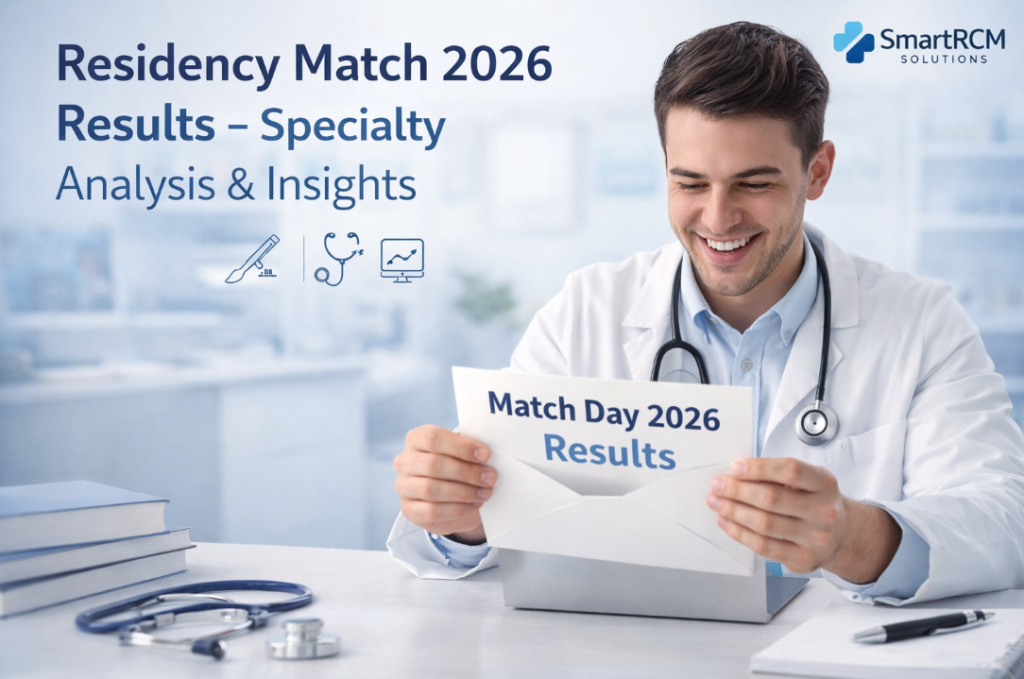
Match Day 2026 occurs on March 20, 2026, when medical students and graduates across the U.S. and international programs receive their residency placements. On this day, applicants learn which programs they matched into based on the NRMP algorithm, which considers both the applicants’ and programs’ rank lists. Match Day marks the culmination of residency match 2026 preparation, including rank list submissions, interviews, and specialty selection. Students who do not match can participate in SOAP to secure unfilled positions. Understanding the residency match process and reviewing specialty-wise match rates helps applicants anticipate results and plan next steps effectively.
In this guide provides comprehensive coverage of residency match results, rates by specialty, IMG trends, fellowship highlights, and next steps after Match Day. By following this resource, students can optimize their preparation and navigate the post-Match process effectively.
Residency Match 2026 Timeline & Match Week
The Match Week 2026 begins with submission of rank lists by both applicants and residency programs. Transitional events include notifications for unmatched positions and preparation for SOAP. Understanding the NRMP timeline ensures applicants meet all deadlines and reduces errors. By Match Day 2026, all positions are officially filled, and results are released to candidates. Observing this timeline allows applicants to stay organized, plan relocation, and ensure licensing documents are ready.
How the Residency Match Process Works
The residency match process uses a computerized algorithm to pair applicants with residency programs based on rank preferences. Applicants submit their lists while programs submit theirs simultaneously. The NRMP algorithm ensures fairness, prioritizing higher-ranked matches. On Match Day 2026, candidates receive results, allowing them to prepare for SOAP if unmatched. This process promotes transparency and fairness across all specialties. Transitional planning helps applicants reduce stress and act quickly when updates are released.
Specialty Wise Residency Match Rates 2026
The Specialty Wise Residency Match Rates 2026 provide a clear picture of competitiveness across different medical fields. Each specialty, from Internal Medicine and Pediatrics to Surgery, Radiology, and Dermatology, shows varying residency match rates by specialty, highlighting trends for both U.S. graduates and IMGs. For instance, high-demand specialties like Orthopedics, Plastic Surgery, and Ophthalmology typically have lower match rates, while fields like Psychiatry and Anesthesia remain more accessible. Monitoring these rates, along with IMG match rate by country and non-US IMG match rates, helps applicants make informed choices, plan backup strategies, and align applications with realistic chances of matching. Understanding the residency match 2026 specialty data is crucial for students aiming to maximize their placement success on Match Day 2026.
1. Internal Medicine Match Rate 2026
| Program | State | Positions | Matched Applicants | Notes |
|---|---|---|---|---|
| Coming Soon | Coming Soon | Coming Soon | Coming Soon | Coming Soon |
Internal Medicine remains highly competitive. Transitional analysis shows rising applicant interest due to work-life balance and residency opportunities.
2. Pediatrics Match Rate 2026
| Program | State | Positions | Matched Applicants | Notes |
|---|---|---|---|---|
| Coming Soon | Coming Soon | Coming Soon | Coming Soon | Coming Soon |
Pediatrics continues to attract both US graduates and IMGs. Monitoring residency match rates by specialty helps applicants identify trends and improve their application strategy.
3. Surgery Match Rate 2026
| Program | State | Positions | Matched Applicants | Notes |
|---|---|---|---|---|
| Coming Soon | Coming Soon | Coming Soon | Coming Soon | Coming Soon |
Surgery specialties are highly competitive, with lower match rates for IMGs. Observing non US IMG match rates by specialty can guide applicants in deciding backup specialties.
4. Radiology Match Rate 2026
| Program | State | Positions | Matched Applicants | Notes |
|---|---|---|---|---|
| Coming Soon | Coming Soon | Coming Soon | Coming Soon | Coming Soon |
Radiology sees increasing interest from US graduates, while IMG match rate by country varies widely. Strategic preparation is recommended.
5. Plastic Surgery Match Rate 2026
| Program | State | Positions | Matched Applicants | Notes |
|---|---|---|---|---|
| Coming Soon | Coming Soon | Coming Soon | Coming Soon | Coming Soon |
Plastic surgery remains one of the most competitive specialties. Applicants should analyze residency match rates 2026 carefully to align expectations.
6. Otolaryngology ENT Match Rate 2026
| Program | State | Positions | Matched Applicants | Notes |
|---|---|---|---|---|
| Coming Soon | Coming Soon | Coming Soon | Coming Soon | Coming Soon |
ENT match rates are challenging for both US grads and IMGs. Tracking ENT match rate 2026 is essential for informed applications.
7. Dermatology Match Rate 2026
| Program | State | Positions | Matched Applicants | Notes |
|---|---|---|---|---|
| Coming Soon | Coming Soon | Coming Soon | Coming Soon | Coming Soon |
Dermatology attracts highly competitive applicants. Residency match rates by specialty show a selective pattern favoring strong academic backgrounds.
8. Psychiatry Match Rate 2026
| Program | State | Positions | Matched Applicants | Notes |
|---|---|---|---|---|
| Coming Soon | Coming Soon | Coming Soon | Coming Soon | Coming Soon |
Psychiatry has moderate competition with good opportunities for IMGs. Reviewing IMG match rate by country can guide international applicants.
9. Anesthesia Match Rate 2026
| Program | State | Positions | Matched Applicants | Notes |
|---|---|---|---|---|
| Coming Soon | Coming Soon | Coming Soon | Coming Soon | Coming Soon |
Anesthesia match rates show steady placement for US grads, while non US IMG match rate by specialty provides insights for foreign applicants.
10. Ophthalmology Match Rate 2026
| Program | State | Positions | Matched Applicants | Notes |
|---|---|---|---|---|
| Coming Soon | Coming Soon | Coming Soon | Coming Soon | Coming Soon |
Ophthalmology remains competitive, with limited positions. Transitional insights help applicants decide on dual applications.
11. OBGYN Match Rate 2026
| Program | State | Positions | Matched Applicants | Notes |
|---|---|---|---|---|
| Coming Soon | Coming Soon | Coming Soon | Coming Soon | Coming Soon |
OBGYN attracts a mix of US graduates and IMGs. Residency match rate 2026 indicates trends for program preferences.
12. Urology Match Rate 2026
| Program | State | Positions | Matched Applicants | Notes |
|---|---|---|---|---|
| Coming Soon | Coming Soon | Coming Soon | Coming Soon | Coming Soon |
Urology is highly selective. Observing residency match rates by specialty helps applicants adjust their strategy.
13. Orthopedics Match Rate 2026
| Program | State | Positions | Matched Applicants | Notes |
|---|---|---|---|---|
| Coming Soon | Coming Soon | Coming Soon | Coming Soon | Coming Soon |
Orthopedics attracts top applicants with competitive match rates. Tracking IMG match rates by country is helpful for international candidates.
IMG (International Medical Graduate) Match Analysis
IMGs actively participate in the Residency Match 2026. Some specialties, such as Internal Medicine, Pediatrics, and Psychiatry, have higher IMG match rates by country, while surgical and highly competitive fields see lower international placement. Understanding historical NRMP match data 2026 and analyzing non-US IMG match rate by specialty allows international candidates to prioritize programs effectively and develop realistic application strategies.
- High IMG Match Specialties: Internal Medicine, Pediatrics, Psychiatry
- Low IMG Match Specialties: Surgery, Orthopedics, Plastic Surgery
- Strategy Tip: Review historical NRMP match data 2026 for better planning
Fellowship Match 2026 Highlights
Fellowship programs announce results after residency placements. Candidates planning advanced training must track fellowship match dates 2026 and rank list deadlines. Transitional planning allows residents to stay competitive for specialty fellowships and ensures timely submission of all required documents.
Post-Match Advice
Applicants should prepare for SOAP, organize licensing documentation, and evaluate specialty trends for future applications. Transitioning into the next cycle requires strategic planning, mentorship, and awareness of specialty-specific competition.
FAQs – Residency Match 2026
Q1: When is Match Day 2026?
A1: Match Day 2026 is on March 20, 2026, when applicants discover their residency assignments.
Q2: How can I check my NRMP Match 2026 results?
A2: Registered applicants log in to the NRMP portal to view results.
Q3: What are the residency match rates by specialty?
A3: Rates vary per specialty. Tables above will be updated on Match Day.
Q4: What is the residency match process?
A4: Applicants submit rank lists; programs submit preferences; NRMP algorithm matches candidates fairly.
Q5: What happens if I do not match?
A5: Unmatched applicants can participate in SOAP to secure unfilled positions.
Q6: When is the fellowship match day 2026?
A6: Fellowship match results are released after residency Match Day according to program timelines.
Conclusion
The Residency Match 2026 provides critical insights into specialty trends, IMG placement, and overall competitiveness. By reviewing specialty-wise match rates, NRMP data, and Match Day results, applicants can make informed decisions, plan backup strategies, and optimize their residency applications. Furthermore, staying organized and leveraging professional support can significantly improve outcomes. For those seeking expert guidance in medical billing, residency tracking, or RCM services, our Smart RCM Solutions service offers comprehensive tools and support to streamline the entire process. By combining careful planning with reliable resources, applicants can confidently navigate Match Week 2026 and maximize their chances of success.