Medical billing compliance is not just about avoiding fines — it’s about protecting patient data, ensuring accurate reimbursements, and maintaining trust in your practice.
Medical Billing Compliance Checklist
In 2025, new updates in HIPAA, OIG guidelines, payer contracts, and electronic health record (EHR) rules are making compliance more complex than ever.
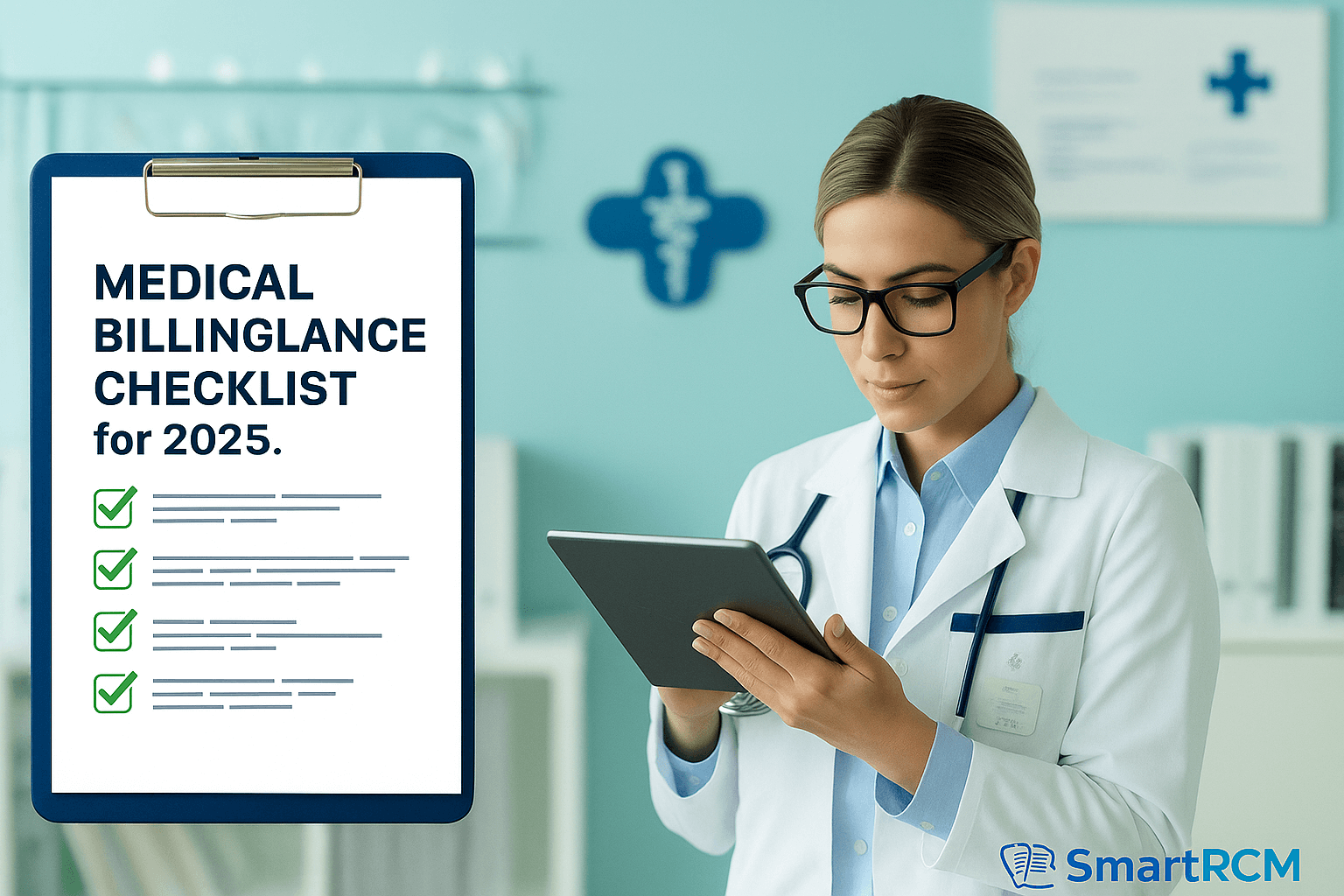
This blog provides a complete Medical Billing Compliance Checklist for 2025 — designed for clinics, hospitals, billing companies, and solo practitioners.
📋 2025 Medical Billing Compliance Checklist
Here’s a detailed breakdown of everything your practice needs to stay compliant and audit-ready this year.
✅ 1. HIPAA Privacy & Security Compliance
Ensure full adherence to HIPAA regulations regarding patient data protection.
Checklist:
- Secure access controls for billing software
- Staff trained on HIPAA annually
- Encrypted storage and transmission of patient data
- Business Associate Agreements (BAAs) in place
- Secure email and messaging systems
✅ 2. Accurate Coding Practices
Compliance depends on the correct use of ICD-10, CPT, and HCPCS codes.
Checklist:
- Coders certified and trained in 2025 updates
- Coding guidelines reviewed quarterly
- Regular code audits conducted
- Code selection matches documentation
- Avoid upcoding/downcoding
✅ 3. Billing Software & System Safeguards
Your billing system must support secure, compliant workflows.
Checklist:
- Software is HIPAA-compliant
- Role-based access (admin, coder, biller, etc.)
- Backup and disaster recovery in place
- Auto-logout after inactivity
- Claims scrubbing tools enabled
✅ 4. Compliance Training for Staff
Everyone in the billing process should be trained — from front desk to RCM staff.
Checklist:
- Compliance training done yearly
- Documentation and billing workshops
- Policy manual available and updated
- Code of conduct for billing ethics
- Training logs maintained
Read More:
✅ 5. OIG Compliance Program Guidance
The Office of Inspector General (OIG) recommends compliance programs to prevent fraud and abuse.
Checklist: Top 10 Medical Billing Mistakes to Avoid?
- Written compliance plan in place
- Regular audits and risk assessments
- Hotline or anonymous reporting method for concerns
- Designated compliance officer (or team)
- Corrective action process for non-compliance
✅ 6. Medicare/Medicaid Billing Compliance
Government payers have strict rules and high audit risk.
Checklist:
- Stay updated with CMS changes
- Use NCCI edits and MUEs properly
- Ensure accurate provider enrollment
- Avoid duplicate billing or modifier misuse
- Retain records for 6–10 years
✅ 7. Patient Communication & Consent
Patients must be informed and agree to how their information is used.
Checklist:
- Notice of Privacy Practices given
- Financial policies explained at registration
- Signed consent forms on file
- Clear explanations of charges and balances
✅ 8. Internal Audit and Quality Control
Self-auditing is key to catching problems early.
Checklist:
- Conduct monthly internal audits
- Use third-party audits annually
- Track claim denial reasons and patterns
- Review write-offs and adjustments
- Document audit findings and resolutions
✅ 9. Timely Filing and Clean Claims
Submitting clean claims on time avoids delays and denials.
Checklist:
- Know payer-specific filing deadlines
- Pre-scrub claims for errors
- Use claim tracking tools
- Refile denials within appeal windows
- Monitor A/R regularly
✅ 10. Data Retention & Documentation
Proper documentation is your best defense in a billing audit.
Checklist:
- Store records for the legally required period (often 6–10 years)
- Maintain billing logs and communications
- Use standardized formats for notes
- Secure cloud or offline storage for old records
📊 Benefits of Staying Compliant in 2025
🔒 Protects against legal issues and audits
💰 Prevents costly billing errors and claim rejections
📈 Boosts revenue through clean claims and timely payments
👥 Builds patient trust and transparency
🏆 Improves clinic reputation and payer relationships
❓ FAQs: Medical Billing Compliance
Q. What is billing compliance in healthcare?
A. Billing compliance means following laws, payer rules, and best practices to ensure accurate, legal, and ethical billing.
Q. Who is responsible for billing compliance?
A. Everyone — from providers to front desk staff to billers. However, clinics often designate a compliance officer.
Q. How often should medical billing compliance training occur?
A. At least once per year, and whenever there are regulation updates.
Q. What happens if you’re not compliant?
A. Non-compliance can lead to denied claims, lost revenue, government audits, or penalties.
Q. Is there a standard compliance checklist for clinics?
A. There is no one-size-fits-all, but this blog provides a reliable framework based on HIPAA, CMS, and OIG guidelines.
Q. How do I know if my billing is compliant?
A. Use a compliance checklist, perform audits, and consider hiring a professional RCM consultant.
🏁 Conclusion: Build a Culture of Compliance
Billing compliance is not a one-time task — it’s a continuous process. The more proactive your clinic is in following guidelines, the smoother your revenue cycle will run.
Need help setting up a billing compliance plan for your clinic?
👉 Smart RCM Solutions offers compliance audits, training, and full-service medical billing to help you stay on track in 2025.